Call or WhatsApp today for a free quote : +1 (416) 660-5054

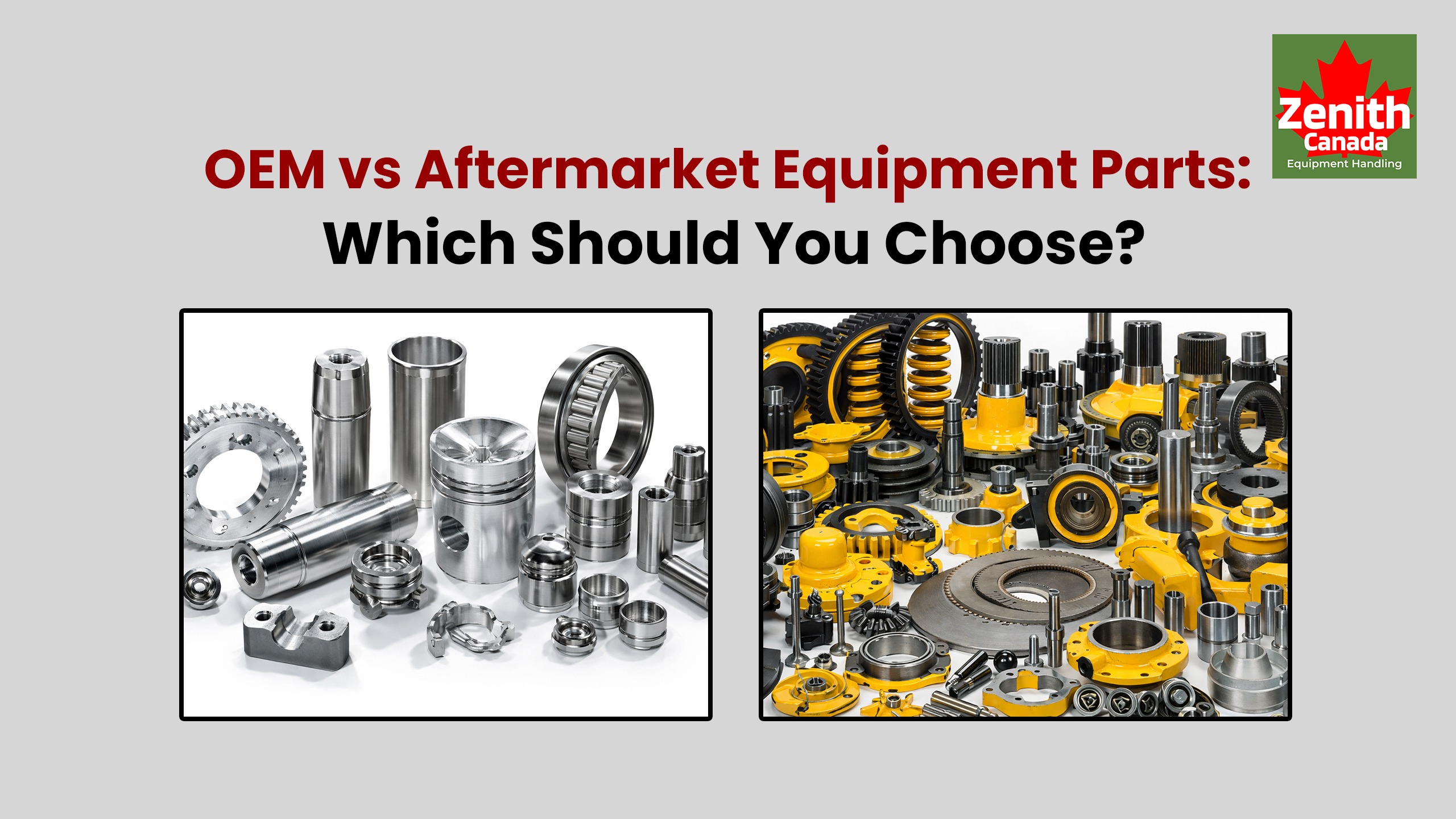
OEM vs Aftermarket Equipment Parts: Which Should You Choose?
Heavy equipment and material handling machinery are significant investments for Canadian businesses. Whether you operate forklifts, pallet jacks, scissor lifts, skid steers, or excavators, maintaining equipment performance is essential for productivity, safety, and profitability. When replacement parts are needed, one of the most common questions equipment owners face is: OEM vs Aftermarket Equipment Parts – which is the better choice?
Understanding the differences between OEM and aftermarket parts can help you make informed purchasing decisions, reduce downtime, and maximize the lifespan of your equipment. In this guide, we’ll compare both options, discuss their advantages and disadvantages, and help you determine which solution is right for your operation.
Understanding OEM Equipment Parts
OEM stands for Original Equipment Manufacturer. OEM parts are produced by the same company that manufactured the equipment or by an authorized supplier that follows the manufacturer’s exact specifications.
For example, if you own a Toyota forklift, an OEM replacement component is designed specifically for that model and meets the manufacturer’s original quality standards.
Advantages of OEM Parts
Guaranteed Compatibility
One of the biggest benefits of OEM parts is that they are engineered specifically for your equipment. This eliminates guesswork and reduces the risk of installation issues.
Consistent Quality
OEM components are manufactured according to strict quality standards. You know exactly what you’re getting because the replacement part matches the original component.
Warranty Protection
Many OEM parts include manufacturer-backed warranties. In some cases, using OEM components may also help maintain equipment warranty coverage.
Improved Reliability
Because OEM parts are designed for a precise fit, they often provide dependable performance and can contribute to longer equipment life.
Disadvantages of OEM Parts
Higher Cost
OEM parts are typically more expensive than aftermarket alternatives. The premium pricing reflects brand reputation, engineering, and warranty coverage.
Limited Availability
Depending on the equipment brand and model, OEM parts may need to be ordered through authorized dealers, which can increase lead times.
What Are Aftermarket Equipment Parts?
Aftermarket parts are manufactured by third-party companies rather than the original equipment manufacturer. These parts are designed to fit and function similarly to OEM components but are often available from multiple suppliers.
The aftermarket industry serves a wide range of equipment types, including forklifts, skid steers, excavators, and scissor lifts, commonly used across Canada.
Advantages of Aftermarket Parts
Lower Purchase Cost
One of the primary reasons businesses choose aftermarket parts is affordability. Many aftermarket options cost significantly less than OEM alternatives.
Wider Selection
Multiple manufacturers may produce similar aftermarket components, giving buyers more choices in terms of pricing, quality, and availability.
Faster Availability
In some situations, aftermarket suppliers maintain extensive inventories, helping businesses obtain parts quickly and reduce equipment downtime.
Competitive Performance
High-quality aftermarket manufacturers often produce parts that perform comparably to OEM components, particularly for non-critical wear items.
Disadvantages of Aftermarket Parts
Quality Can Vary
Not all aftermarket parts are created equal. While some manufacturers produce excellent products, others may offer lower-quality components that wear out faster.
Potential Fitment Issues
Because aftermarket parts are reverse-engineered rather than produced by the original manufacturer, slight differences in fit or performance may occur.
Warranty Concerns
Using certain aftermarket components may affect warranty coverage on newer equipment. Always review manufacturer recommendations before installation.
OEM vs Aftermarket Equipment Parts: Key Differences
When evaluating OEM vs Aftermarket Equipment Parts, several factors should influence your decision.
Cost
OEM parts generally carry a higher upfront price, while aftermarket parts are usually more budget-friendly.
If reducing immediate maintenance expenses is your priority, aftermarket parts may seem attractive. However, long-term value should also be considered.
Quality Assurance
OEM parts offer predictable quality because they are manufactured according to original specifications.
Aftermarket quality varies between suppliers, making it essential to purchase from reputable sources with proven track records.
Availability
Aftermarket suppliers often provide broader inventory options and faster delivery times.
OEM parts may require dealer ordering, especially for older equipment models.
Equipment Performance
For critical systems such as hydraulics, electrical components, safety systems, and engine-related parts, OEM components often provide greater confidence in performance and reliability.
For general wear items, many quality aftermarket options perform exceptionally well.
When Should You Choose OEM Parts?
There are several situations where OEM components are often the preferred option.
Newer Equipment
If your machinery is relatively new and still under warranty, OEM parts may help maintain warranty compliance and protect your investment.
Critical Components
For safety-related systems, hydraulic assemblies, electrical controls, or specialized components, OEM parts can reduce risk and ensure proper operation.
High-Utilization Equipment
Businesses that rely heavily on equipment daily may prioritize reliability over initial cost savings. In these cases, OEM components often provide peace of mind.
Manufacturer-Specific Systems
Some advanced equipment technologies are designed around proprietary components that work best with OEM replacements.
When Are Aftermarket Parts a Smart Choice?
Aftermarket components can be an excellent solution in many situations.
Older Equipment
For aging machinery where warranty concerns are no longer relevant, aftermarket parts can offer substantial savings without compromising functionality.
Budget-Conscious Operations
Companies managing large fleets often use aftermarket components strategically to control maintenance expenses.
Common Wear Items
Filters, tires, seats, chains, forks, wheels, bearings, and similar replacement items are often available from reputable aftermarket suppliers at competitive prices.
Hard-to-Find OEM Components
In some cases, aftermarket manufacturers continue producing parts for older equipment long after OEM suppliers discontinue support.
Finding the Right Balance
The discussion surrounding OEM vs Aftermarket Equipment Parts doesn’t always require choosing one option exclusively.
Many successful Canadian businesses adopt a hybrid strategy:
- Use OEM parts for critical systems and safety components.
- Use high-quality aftermarket parts for routine maintenance and common wear items.
- Partner with experienced equipment specialists who understand compatibility requirements.
- Evaluate total ownership costs rather than focusing solely on purchase price.
This balanced approach often provides the best combination of reliability, performance, and cost control.
How to Evaluate Aftermarket Suppliers
If you’re considering aftermarket options, take time to evaluate suppliers carefully.
Look for:
- Industry experience and reputation
- Product warranties
- Positive customer reviews
- Technical support availability
- Equipment-specific expertise
- Proven quality control standards
Working with a trusted parts supplier can significantly reduce the risks often associated with aftermarket components.
Why Parts Quality Matters
Whether you choose OEM or aftermarket components, quality should never be compromised.
Low-quality replacement parts can lead to:
- Increased equipment downtime
- Higher repair costs
- Reduced operational efficiency
- Premature component failure
- Workplace safety concerns
Investing in reliable replacement parts helps maintain productivity and protects your equipment investment over the long term.
At Zenith Canada, we regularly share real-world maintenance projects, component replacements, equipment inspections, and repair success stories on our Facebook page across forklifts, pallet jacks, scissor lifts, skid steers, and other material handling equipment. Following these updates can provide valuable insight into how quality replacement parts contribute to equipment performance, reliability, and workplace safety. Browse our latest equipment service and parts-related updates on Facebook to see practical examples from Canadian worksites.
Conclusion
When comparing OEM vs Aftermarket parts, there’s no universal answer—the best choice depends on your equipment type, budget, and maintenance goals. OEM parts guarantee compatibility and quality for critical applications, while aftermarket parts offer affordability and wider availability from reputable suppliers.
For most Canadian businesses, the smartest strategy is combining both—selecting the right part for the right application to maximize performance while controlling costs.
If you need reliable equipment parts, expert guidance, or professional repair services for a fork.lifts, pallet jacks, scissor lifts, skid steers, excavators, and other material handling equipment, Zenith Canada can help you find the right solution.