Call or WhatsApp today for a free quote : +1 (416) 660-5054

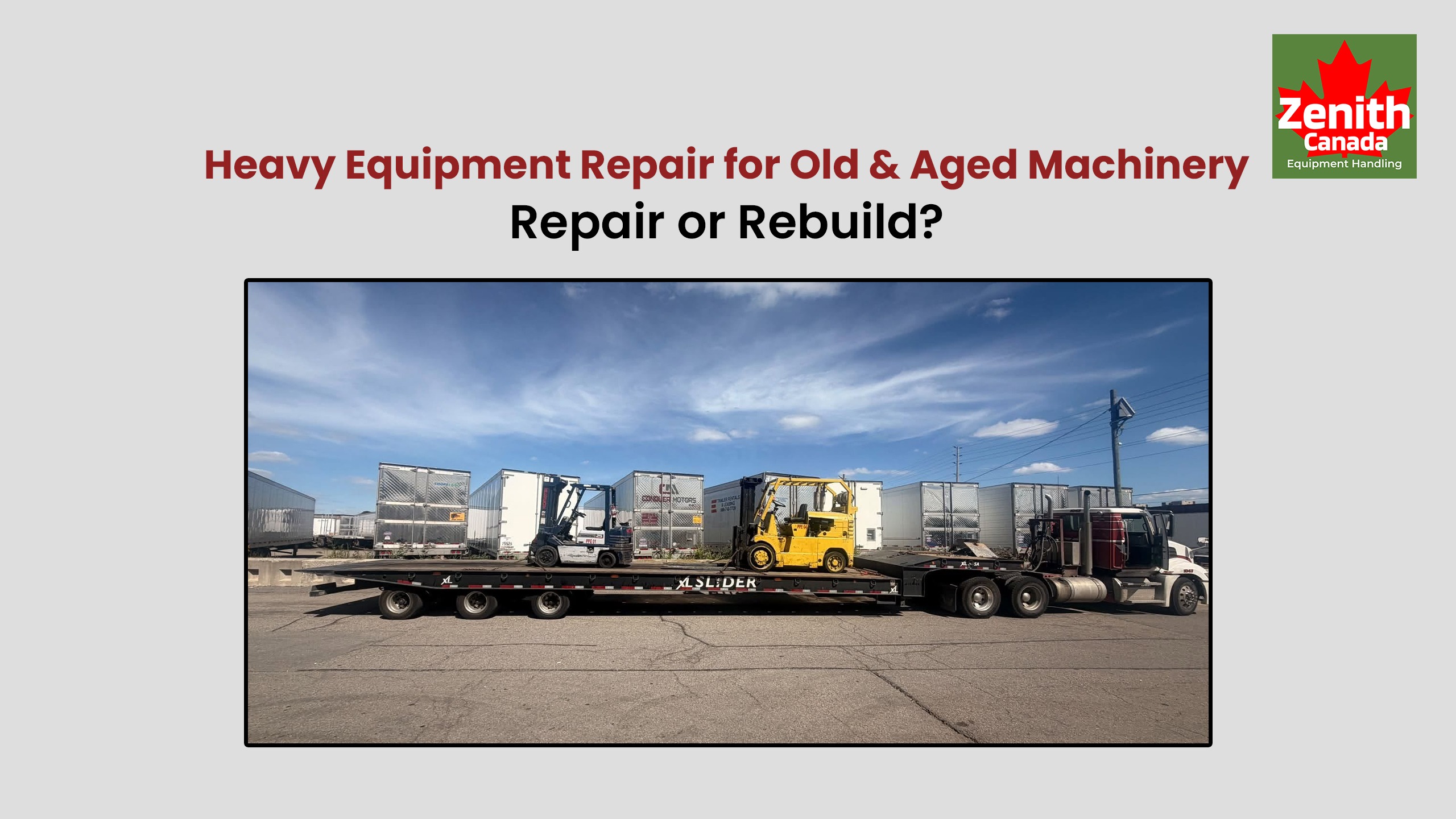
Heavy Equipment Repair in Canada for Old & Aged Machinery: Repair or Rebuild?
Old and aged machinery can become less reliable, less productive, and more expensive to operate. If you need heavy equipment repair in Canada, the key decision is whether to repair the existing problem, rebuild the machine, or replace it entirely. The right option depends on the machine’s condition, repair history, parts availability, operating environment, and expected future use.
Repair or Rebuild: What Is the Difference?
A repair addresses a specific problem, such as a hydraulic leak, failed alternator, damaged hose, or overheating issue. A rebuild is a more extensive process that may involve disassembling and restoring the engine, transmission, hydraulic system, undercarriage, electrical system, or other major components.
| Option | Best suited for | Main advantage |
| Repair | An isolated fault or limited component failure | Lower cost and shorter downtime |
| Rebuild | Multiple worn systems or recurring breakdowns | Extends service life and improves reliability |
| Replace | Unsafe structure, obsolete components, or excessive repair costs | Provides newer technology and predictable performance |
A proper rebuild should include detailed inspections, component testing, replacement of worn parts, reassembly, and performance testing. It should not be limited to cosmetic refurbishment or replacing only the most visible damaged components.
When to Choose Heavy Equipment Repair in Canada
Repair is usually the better choice when:
- The issue is limited to one component or system.
- The engine, transmission, hydraulics, and frame remain in good condition.
- The machine has a reliable service history.
- Replacement parts are available in Canada.
- You need to reduce downtime quickly.
- The repair cost is significantly lower than rebuilding or replacing the machine.
Common repairs include hydraulic cylinder repair, engine diagnostics, transmission repair, electrical troubleshooting, undercarriage service, brake repair, cooling-system work, and attachment repairs.
Canada’s demanding operating conditions can make timely maintenance especially important. Cold temperatures, snow, ice, mud, dust, and long operating hours can place additional stress on batteries, fluids, hydraulic systems, cooling systems, and undercarriage components. Using the correct fluids and genuine or high-quality aftermarket heavy equipment parts can help maintain machine performance.
When Should You Rebuild Old Machinery?
Rebuilding may be a practical option when the equipment has a solid frame and chassis but several major systems have reached the end of their normal service life.
Consider a rebuild when:
- The machine experiences frequent breakdowns.
- Engine oil consumption, smoke, or blow-by is increasing.
- Hydraulic pressure and attachment performance are declining.
- The transmission slips, shifts late, or produces excessive noise.
- The undercarriage or final drives show severe wear.
- Multiple components require replacement at the same time.
- Production is declining while fuel and maintenance costs are rising.
- Suitable replacement equipment is too expensive or difficult to obtain.
- Heavy equipment parts and technical support remain available for the model.
- You plan to operate the machine for several more years.
A rebuild can also be beneficial when operators are familiar with the machine and the equipment is already configured for your worksite, attachments, and applications.
Signs Your Equipment Needs Attention
Before deciding between repair and rebuild, arrange a professional inspection if the machine shows:
- Repeated hydraulic leaks or weak hydraulic performance.
- Excessive exhaust smoke or unusual engine noise.
- Overheating during normal operation.
- Increased fuel or oil consumption.
- Slow cranking or recurring electrical faults.
- Transmission slipping or delayed engagement.
- Excessive play in pins, bushings, boom, arm, or bucket linkage.
- Cracked frames, worn welds, or structural damage.
- Uneven track or tire wear.
- Frequent fault codes and unplanned downtime.
- Rising repair costs with declining productivity.
One symptom does not automatically mean that a complete rebuild is required. A detailed inspection can identify whether the problem is isolated or part of broader machine deterioration.
Choosing the Right Heavy Equipment Parts
The quality and availability of heavy equipment parts can significantly affect repair cost, reliability, and turnaround time. Depending on the application and budget, you may choose from:
- Original equipment manufacturer parts.
- Remanufactured components.
- High-quality aftermarket parts.
- Rebuilt or reconditioned components.
- Used parts from reputable suppliers or dismantlers.
OEM parts are designed for the specific machine, while aftermarket parts may provide a more economical option when sourced from a reliable manufacturer. Remanufactured parts can be useful for engines, transmissions, hydraulic pumps, injectors, alternators, and other major components.
Before purchasing parts, confirm:
- The exact make, model, serial number, and year of the machine.
- Component compatibility and specifications.
- Warranty coverage.
- Expected delivery time within Canada.
- Whether the part is new, remanufactured, rebuilt, or used.
- Installation requirements and core-return conditions.
- Availability of technical support.
Avoid choosing parts based only on the lowest price. A low-cost component that fails early can increase labor expenses, downtime, and overall ownership costs.
Repair Cost vs. Rebuild Cost
A single repair may appear inexpensive, but repeated failures can make an old machine costly to operate. Compare the following:
- Parts and labor.
- Diagnostic and inspection charges.
- Transportation and mobilization.
- Machine downtime.
- Lost production.
- Emergency service costs.
- Future repair requirements.
- Fuel consumption.
- Expected resale value.
- Warranty and after-sales support.
A useful comparison is the estimated cost per productive operating hour after the repair or rebuild. If a rebuild provides several additional years of dependable service, it may offer better value than repeated short-term repairs.
However, replacement may be more sensible when:
- The frame or chassis is unsafe.
- Critical parts are obsolete or unavailable.
- The machine cannot meet current safety or emissions requirements.
- Repair costs are close to the price of a dependable replacement.
- Productivity remains too low after major repairs.
- The equipment is unsuitable for your current application.
How to Select a Repair Provider in Canada
When comparing companies that provide heavy equipment repair in Canada, look for a provider that offers:
- Experienced technicians for your machine brand.
- Mobile repair or field-service capabilities.
- Engine, hydraulic, transmission, and electrical diagnostics.
- Access to reliable heavy equipment parts.
- Clear written estimates.
- Before-and-after inspection reports.
- Warranty coverage for parts and labor.
- Emergency or after-hours support.
- Component testing and load testing.
- Service coverage in your province or operating region.
Ask the provider whether the quoted work includes diagnostics, disassembly, machining, replacement parts, reassembly, calibration, testing, transportation, and cleanup. Clarify any excluded work before authorizing the project.
Final Decision
Choose repair when the machine has one main fault and its other major systems are in good condition. Choose a rebuild when several systems are worn, but the frame, chassis, and overall machine design remain suitable for continued work.
For heavy equipment repair in Canada, the best decision is based on a complete condition assessment, not simply the machine’s age. Compare the cost of reliable repairs, the availability of suitable heavy equipment parts, expected downtime, and the machine’s projected service life before deciding whether to repair, rebuild, or replace it.
Zenith Canada Equipment Handling Inc. repairs and rebuilds heavy equipment to help extend its working life and reduce unnecessary replacement costs.
Frequently Asked Questions
Is it worth repairing old heavy equipment?
It can be, particularly when the machine has a sound structure and the required repairs are manageable compared with the cost of replacement.
What heavy equipment can be rebuilt?
Many types of equipment can be repaired or rebuilt, including forklifts, telehandlers, skid steers, loaders, excavators, boom lifts, aerial lifts, dozers, and tractors.
When should heavy equipment be rebuilt instead of repaired?
A rebuild may be considered when a major component, such as an engine, transmission, or hydraulic system, has extensive wear but the equipment itself remains suitable for continued use.
Can parts be made for old heavy equipment?
Depending on the machine and component, custom parts fabrication may be an option when original replacement parts are difficult to source.
How can I extend the life of old heavy equipment?
Regular inspections, scheduled maintenance, timely repairs, and proper operation can help reduce unnecessary wear and keep aging equipment in service longer.