Call or WhatsApp today for a free quote : +1 (416) 660-5054

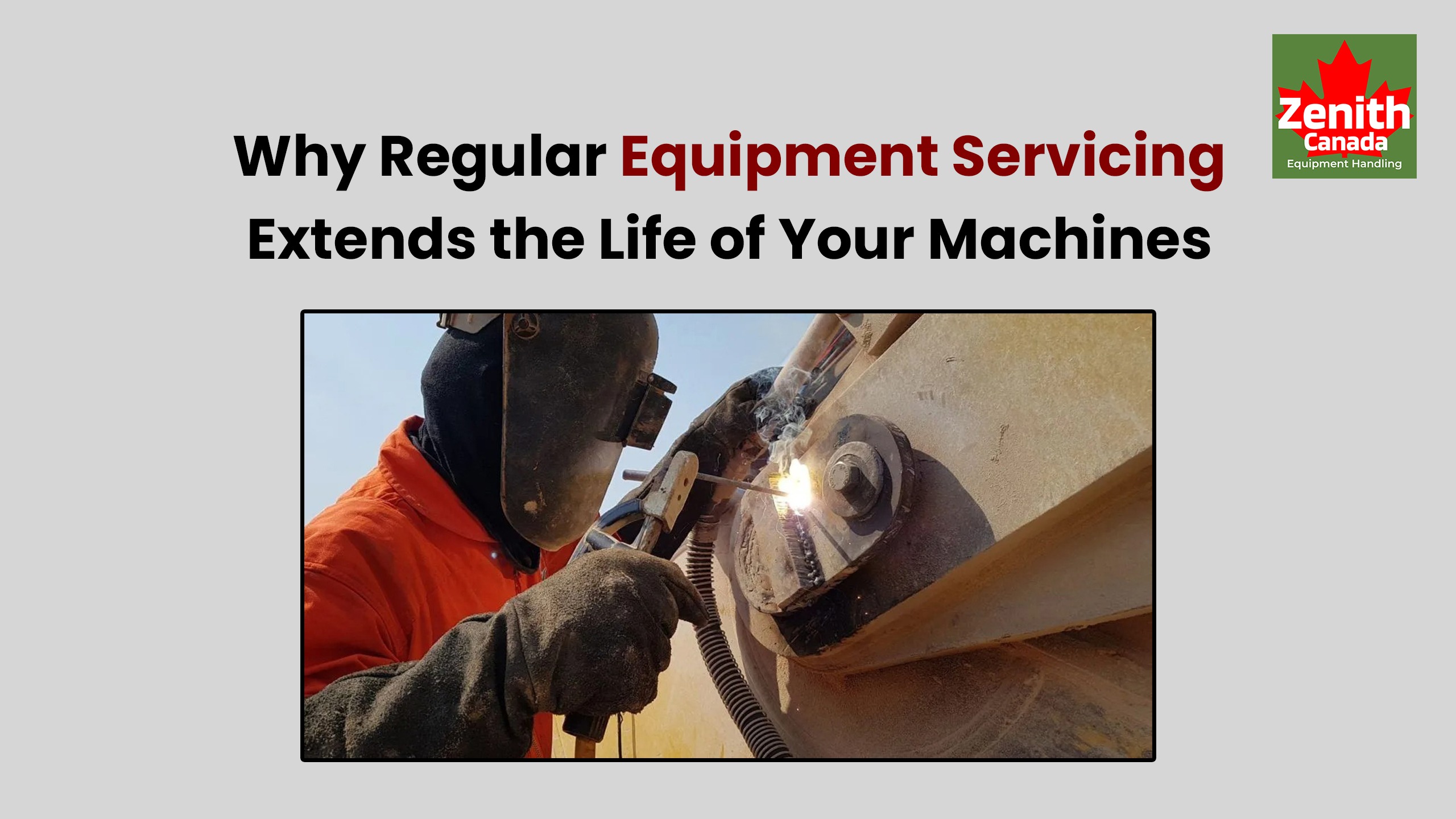
Why Regular Equipment Servicing Extends the Life of Your Machines
Heavy equipment, forklifts, scissor lifts, pallet jacks, and excavators represent a major capital investment for Canadian businesses. The single most effective way to protect that investment is consistent, scheduled equipment servicing.
Yet many operators focus on daily output while deferring maintenance, only to face costly breakdowns, unplanned downtime, and premature machine replacement. This guide explains exactly how regular equipment servicing extends machine lifespan, reduces costs, and improves safety.
What Is Equipment Servicing?
Equipment servicing is a structured programme of inspections, fluid changes, lubrication, component testing, and preventive repairs carried out at manufacturer-recommended intervals. It covers everything from daily fluid checks to annual overhauls and applies to all classes of machinery, material-handling equipment, aerial work platforms, and heavy construction machinery.
How Regular Equipment Servicing Extends Machine Lifespan
1. Prevents Premature Component Failure
Routine servicing allows technicians to catch wear before it cascades into system-level failure. Common early-warning findings include:
- Worn or cracked hydraulic hoses
- Damaged electrical connections
- Loose fasteners and structural hardware
- Contaminated hydraulic or engine fluids
- Weakening batteries
- Uneven or excessive tire wear
Addressing these early costs is a fraction of what major assembly replacement costs later. Changing hydraulic fluid and filters at recommended intervals alone can prevent contamination that destroys pumps, cylinders, and seals components that carry four- and five-figure replacement price tags.
2. Keeps All Systems Operating at Peak Efficiency
Equipment that runs clean, lubricated, and correctly calibrated places less mechanical stress on every component. Regular servicing ensures:
- Engines run within designed temperature and pressure ranges
- Hydraulic systems maintain correct operating pressure
- Batteries charge and discharge efficiently
- Brakes and safety systems engage reliably
- Moving parts stay lubricated and friction-free
For high-utilisation equipment like forklifts, reach trucks, and order pickers running multiple shifts daily, this translates directly into fewer breakdowns and a longer productive service life.
3. Reduces Long-Term Repair and Ownership Costs
Preventive maintenance is not an expense; it’s a cost-avoidance strategy. Replacing a worn bearing costs significantly less than replacing a failed gearbox. Adjusting a chain early prevents it from damaging the mast. Topping off a hydraulic seal before it fails prevents fluid loss that could damage downstream components.
Over a machine’s full life cycle, businesses with active servicing programmes consistently report lower total cost of ownership compared to those using a run-to-failure approach.
Equipment Servicing and Workplace Safety
In Canada, employers have a legal duty to maintain equipment in safe working order under provincial occupational health and safety legislation. Beyond compliance, neglected machinery creates real hazards:
- Faulty brakes or steering on forklifts and heavy equipment
- Hydraulic hose failures under pressure
- Malfunctioning emergency stop systems
- Overloaded or structurally compromised forks or masts
A standard equipment servicing inspection covers brake systems, steering components, fork and mast integrity, hydraulic hoses, emergency stops, safety lighting, and battery systems. Identifying and correcting these issues before they cause incidents protects workers and limits liability.
Equipment Servicing by Machine Type
Forklifts and Material Handling Equipment
Forklifts are among the most intensively used machines in any facility. A complete forklift servicing programme includes mast and chain lubrication, hydraulic fluid replacement, fork inspections, tire assessments, battery maintenance, and engine or motor servicing. A well-maintained forklift routinely delivers 10,000–20,000 hours of service life. A neglected one often fails well before that threshold.
The same discipline applies to pallet jacks, pallet stackers, reach trucks, and order pickers.
Construction Equipment
Excavators, skid steers, and scissor lifts operate in environments with high concentrations of dust, moisture, and mechanical shock, conditions that accelerate wear on hydraulic systems, undercarriages, and electrical components. Regular servicing on construction equipment reduces on-site breakdowns, improves fuel efficiency, and protects structural integrity, all of which have direct cost implications on time-sensitive projects.
How Equipment Servicing Protects Resale Value
When the time comes to sell or trade in machinery, a documented service history is one of the most significant value drivers in the used equipment market. Buyers pay a premium for machines with:
- Complete, consistent service records
- Verified inspection logs
- Evidence of manufacturer-recommended maintenance intervals
Equipment with poor or absent service histories sells at a discount, or doesn’t sell at all. For businesses that rotate fleets every five to ten years, the difference in resale return between well-maintained and poorly maintained machines can be substantial.
Warning Signs Your Equipment Needs Immediate Servicing
Even with a scheduled programme in place, operators should escalate for unplanned servicing if any of these symptoms appear:
| Warning Sign | Likely Cause |
| Unusual grinding or knocking noises | Bearing or gear wear |
| Visible hydraulic leaks | Hose, seal, or fitting failure |
| Slow or weak hydraulic response | Low fluid, pump wear, or contamination |
| Reduced lifting capacity | Hydraulic or structural issue |
| Battery not holding charge | Cell degradation or charging fault |
| Engine overheating | Coolant, oil, or airflow issue |
| Warning lights illuminated | Sensor or system fault |
| Increased fuel or energy consumption | Mechanical inefficiency |
Do not defer action on any of these indicators. Minor issues identified and addressed promptly are almost always less expensive than the failures they prevent.
Building an Effective Equipment Servicing Programme
The most effective approach combines operator-led daily checks with professionally conducted scheduled servicing.
Daily (Operator Checks)
- Fluid levels (hydraulic, engine oil, coolant)
- Tire condition and pressure
- Visible leaks
- Battery state of charge
- Functional check of safety devices
Monthly (Supervisor or In-House Technician)
- Hydraulic system condition and pressure
- Brake performance
- Electrical connections and wiring condition
- Structural inspection (forks, mast, frame, chassis)
Scheduled Professional Servicing
(Intervals per manufacturer specification typically every 250, 500, or 1,000 operating hours)
- Full fluid replacement (hydraulic, engine, transmission)
- Filter changes
- Component load testing
- Brake system calibration
- Safety system certification
- Preventive parts replacement
Working with accredited equipment servicing technicians ensures that all procedures align with manufacturer specifications, OHS requirements, and industry best practices.
Frequently Asked Questions About Equipment Servicing
How often should heavy equipment be serviced?
Service intervals depend on the equipment type and usage intensity. Most manufacturers recommend professional servicing every 250 to 500 operating hours, with daily operator checks every shift. High-utilisation equipment may require more frequent intervals.
What does an equipment service include?
A comprehensive equipment service typically includes fluid inspection and replacement, filter changes, lubrication of all moving parts, hydraulic system testing, brake inspection, electrical system checks, tire assessment, and safety system verification.
Does regular servicing actually extend equipment life?
Yes. Manufacturer data and fleet management studies consistently show that equipment on proactive maintenance programmes operates reliably for significantly longer than equipment maintained reactively. Preventing component wear compounds over time — each service reduces the likelihood of failures that shorten a machine’s working life.
What happens if equipment servicing is delayed?
Deferred maintenance allows minor wear to escalate into system failures. This results in higher repair costs, longer downtime, reduced resale value, and — in safety-critical systems — increased risk of workplace incidents.
At Zenith Canada, we document real-world equipment servicing projects, routine inspections, component replacements, and repair outcomes across our Facebook page, covering forklifts, pallet jacks, scissor lifts, skid steers, and a wide range of material handling machinery. Following our updates gives you a ground-level view of how scheduled maintenance and quality parts directly impact equipment performance, reliability, and operational safety on Canadian worksites. Browse our latest servicing and parts-related posts on Facebook to see what proactive equipment servicing looks like in practice.
Conclusion
Regular equipment servicing is one of the highest-return investments a Canadian business can make in its machinery fleet. It extends machine lifespan, reduces total ownership costs, maintains safety compliance, and protects resale value, all while keeping operations running reliably.
Whether you operate forklifts, pallet jacks, scissor lifts, skid steers, or excavators, a structured servicing programme by Zenith Canada is not optional maintenance; it’s sound business practice.