Call or WhatsApp today for a free quote : +1 (416) 660-5054

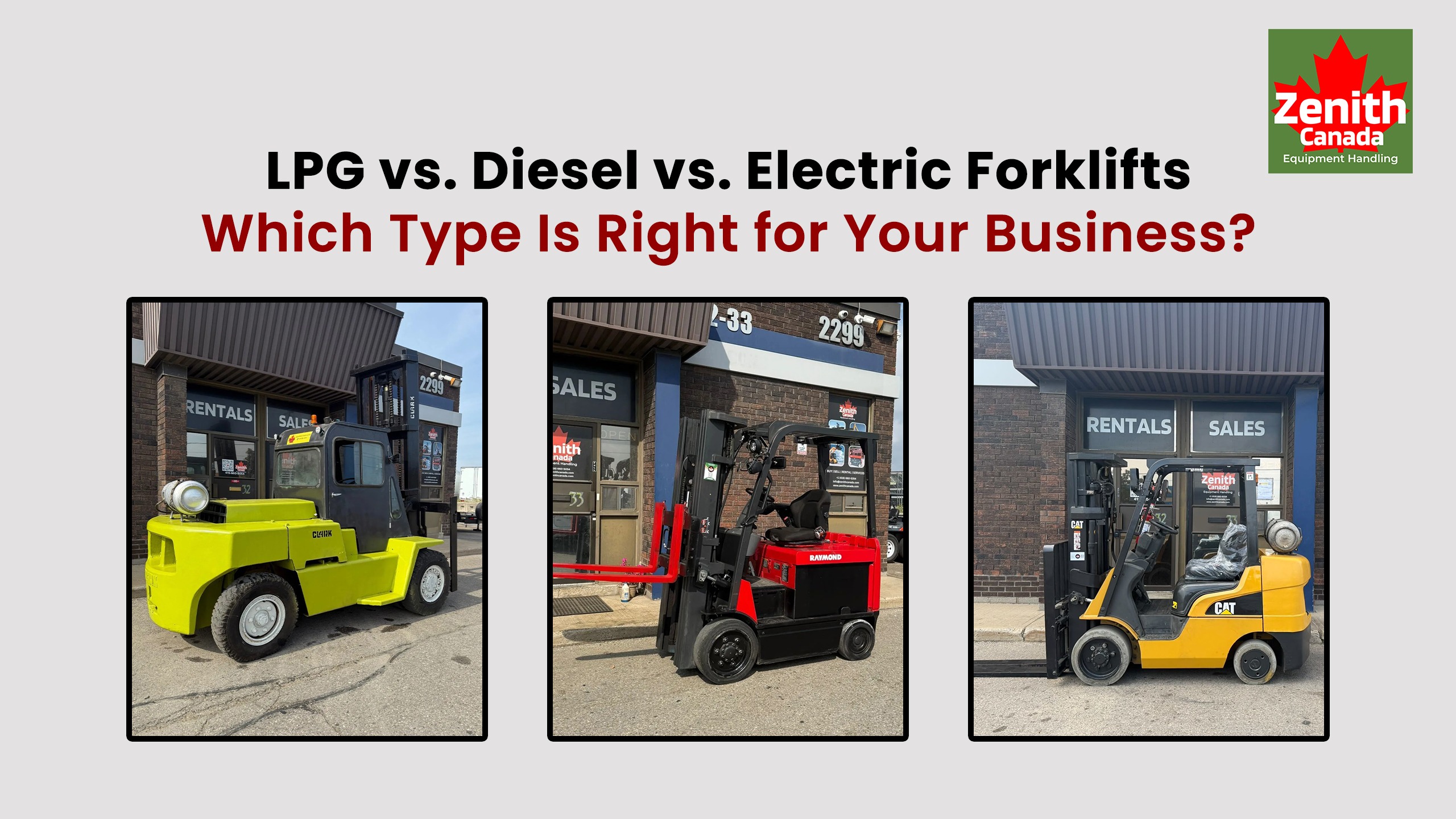
LPG vs. Diesel vs. Electric Forklifts: Which Type Is Right for Your Business?
LPG forklifts offer the best balance of power and flexibility for mixed indoor/outdoor use, diesel forklifts deliver the most torque for heavy outdoor loads, and electric forklifts are the cleanest, quietest choice for indoor warehouse work. The right forklift type depends on where you operate, how heavy your loads are, and how many shifts you run per day.
How Forklift Fuel Type Affects Indoor vs. Outdoor Use
Before comparing brands or capacities of LPG vs. Diesel vs. Electric Forklifts, the first decision that shapes every other spec is fuel type. Where a forklift will spend most of its working hours- enclosed warehouse aisles, an open yard, or a mix of both- determines whether LPG, diesel, or electric is the right starting point.
Indoor operations with tight ventilation generally favour electric forklifts because they produce zero exhaust emissions. Outdoor sites with rough terrain and long runtimes tend to favour diesel for its torque and refuelling speed. Businesses that move between a warehouse and a loading yard often land on LPG forklifts because the fuel cylinders swap out in minutes and the engine is approved for indoor use.
LPG Forklifts — Pros, Cons, Best Applications
LPG forklifts run on propane cylinders and are approved for indoor use in most facilities, provided ventilation meets local code.
● Pros: fast refuelling (swap a cylinder in under 5 minutes), consistent power output throughout the tank, works both indoors and outdoors
● Cons: fuel cylinders need secure storage, running costs can be higher than electric over high-volume shifts
● Best for: multi-shift operations moving between indoor and outdoor areas, businesses that can’t accommodate charging downtime
Diesel Forklifts — Pros, Cons, Best Applications
Diesel forklifts are built for heavy-duty outdoor work, construction sites, lumber yards, and rough or uneven terrain where torque and durability matter more than emissions.
● Pros: highest torque-to-weight ratio, best fuel efficiency for heavy loads, long service life under demanding conditions
● Cons: not approved for indoor use without specialized filtration, higher noise levels, more emissions
● Best for: outdoor construction, lumber and building supply yards, heavy-capacity loads above 15,000 lbs
Electric Forklifts — Pros, Cons, Best Applications
Electric forklifts run on rechargeable batteries and produce no exhaust emissions, making them the standard choice for enclosed warehouses, food-grade facilities, and cold storage.
● Pros: zero emissions, lowest noise levels, lower maintenance (no engine oil, filters, or exhaust system), lower long-term operating cost
● Cons: requires charging infrastructure and downtime (unless swapping batteries), reduced power on inclines or rough ground
● Best for: single or double-shift indoor warehouse work, food and beverage facilities, noise-sensitive environments
Choosing by Capacity, Mast Height & Warehouse Layout
Fuel type is only half the decision. Capacity (how much weight the forklift lifts) and mast height (how high it reaches) need to match your heaviest regular load and your tallest racking level, not your average load, since undersizing a forklift is a safety risk. A three-stage or four-stage mast is worth the extra cost if you’re stacking above 15 feet, while narrow-aisle warehouses often do better with a compact or three-wheel electric model for tighter turning radius.
Toyota, CAT, Hyster, Yale & Crown — What Sets Each Brand Apart
All five brands are established names in the used forklift market, and the right one usually comes down to parts availability and what your technicians are already trained on, more than a meaningful performance gap between LPG vs. Diesel vs. Electric Forklifts.
● Toyota — widely regarded for reliability and resale value; strong parts network across Canada
● CAT — rugged build quality, popular for outdoor and heavy-duty applications
● Hyster — known for high-capacity models and strong warehouse performance
● Yale — competitive pricing with solid mid-range capacity options
● Crown — a common choice for electric and narrow-aisle warehouse forklifts
New vs. Used: Financing & Trade-In Options
A quality-inspected used forklift typically costs 40–60% less than a new unit while covering the same duty cycle for years, which is why most small and mid-size operations start there. Financing and trade-in programs make the switch easier; trading in an aging unit reduces the upfront cost of an upgrade, and financing spreads the cost over the equipment’s working life rather than tying up cash flow in a single purchase.
If you’re ready to compare available inventory by fuel type, capacity, and brand, browse Zenith Canada’s full range of quality-inspected used forklifts, or reach out for financing and trade-in details.
FAQs
Is an LPG forklift or electric forklift better for a warehouse?
Electric forklifts are generally better suited to enclosed, single-site warehouses because they produce no emissions and cost less per hour to operate. LPG forklifts are better if the same forklift needs to move between indoor and outdoor areas or if charging downtime isn’t practical.
Can diesel forklifts be used indoors?
Standard diesel forklifts are not approved for indoor use because of exhaust emissions. They’re built for outdoor sites with rough terrain and heavy loads.
How much does a used forklift cost compared to a new one?
A quality-inspected used forklift typically costs 40–60% less than a comparable new unit, depending on hours, condition, and capacity.
Which forklift brand has the best resale value?
Toyota and Hyster forklifts are generally recognized for strong resale value and wide parts availability across Canada.