Call or WhatsApp today for a free quote : +1 (416) 660-5054

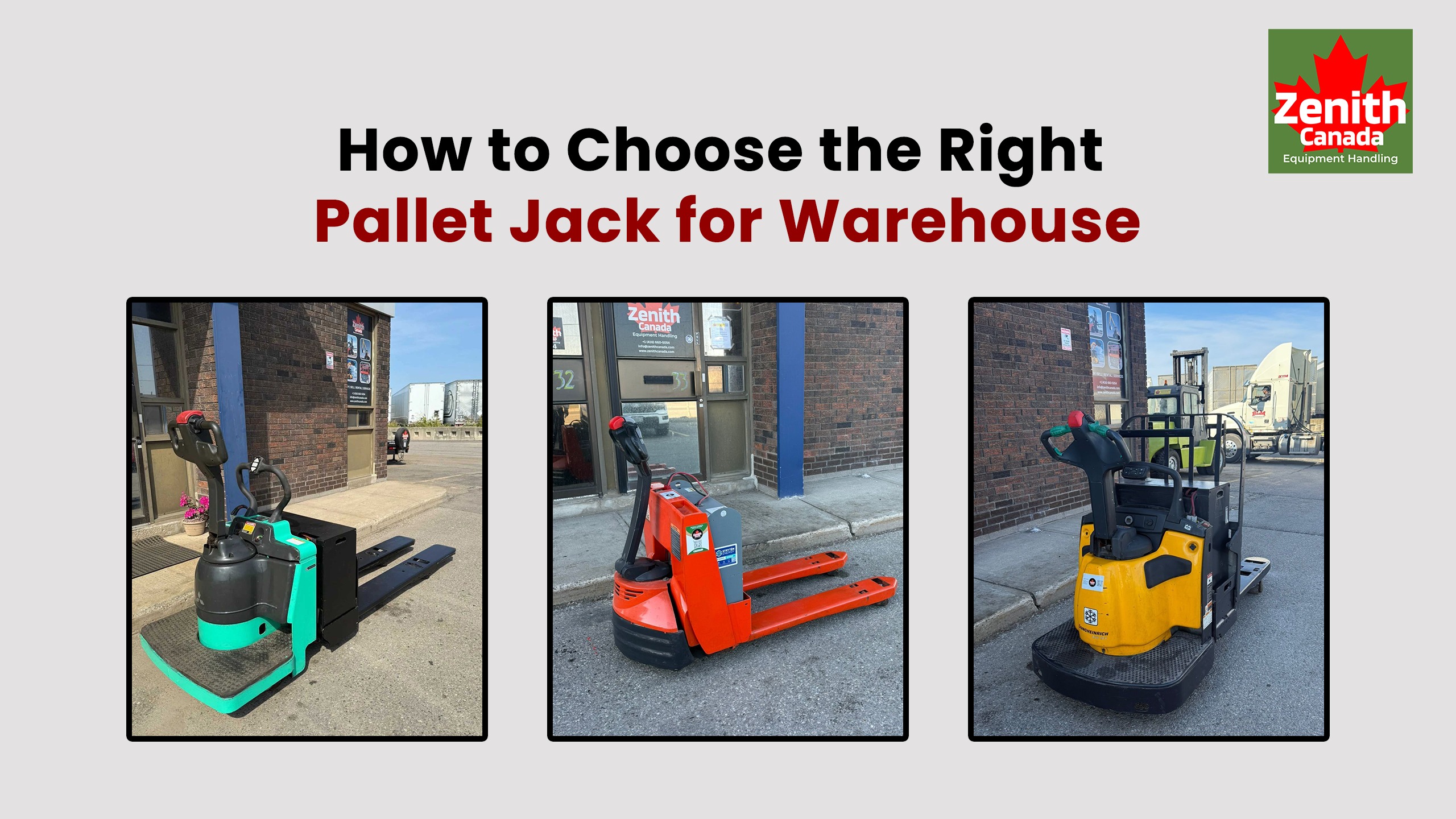
How to Choose the Right Pallet Jack for Warehouse
Choosing the right pallet jack for warehouse operations can make a noticeable difference in productivity, safety, and day-to-day material handling efficiency. Whether you’re moving pallets across a small storage facility or handling high volumes in a busy distribution centre, the right equipment can reduce manual effort and keep materials moving smoothly.
Pallet jacks are available in several configurations, including manual pallet jacks, electric pallet jacks, and walkie pallet trucks. The best option depends on your warehouse layout, pallet loads, travel distance, frequency of use, and budget.
Before purchasing, it’s important to understand what your operation actually needs. Here are the key factors to consider when choosing a pallet jack for warehouse applications.
1. Determine Your Typical Load Capacity
The first consideration when selecting a pallet jack for warehouse use is load capacity.
Start by determining the average and maximum weight of the pallets your team moves. Manual pallet jacks are suitable for many standard warehouse applications, but heavier or more frequent loads may require an electric model.
Choosing equipment with insufficient capacity can create safety risks and accelerate component wear. On the other hand, purchasing equipment with significantly more capacity than required may increase your upfront cost unnecessarily.
Always check the manufacturer’s rated capacity and make sure it comfortably accommodates your normal working loads.
2. Consider Manual vs. Electric Pallet Jacks
The choice between manual and electric equipment depends largely on how frequently your team moves pallets.
Manual Pallet Jacks
A manual pallet jack for warehouse operations is a practical option for short-distance transportation and lighter workloads. They are relatively simple to operate, require less maintenance, and generally have a lower purchase price.
Manual pallet jacks can work well in:
- Small warehouses
- Retail backrooms
- Loading areas
- Short-distance pallet movement
- Low-volume applications
For businesses looking to keep operating costs low, a quality manual pallet jack can be an effective solution.
Electric Pallet Jacks
An electric pallet jack can be a better choice when employees move heavy pallets frequently or travel longer distances.
Electric models reduce the physical effort required from operators and can improve productivity in busy warehouses. They are particularly useful for distribution centres, manufacturing facilities, and larger warehouse environments.
For a more detailed comparison, businesses can also explore the differences between manual and electric pallet jacks before making a purchase.
3. Evaluate Your Warehouse Layout
Your warehouse layout plays an important role when selecting a pallet jack for warehouse applications.
Measure the width of your aisles, doorways, loading areas, and storage spaces. If your operation has narrow aisles or tight corners, you may need a compact pallet jack with a smaller turning radius.
Also consider the surfaces where the equipment will operate.
Smooth concrete floors are generally suitable for most pallet jacks. However, uneven surfaces, ramps, dock plates, or outdoor areas may require equipment specifically designed for those conditions.
Matching the pallet jack to your warehouse environment can improve manoeuvrability and reduce unnecessary wear.
4. Check Fork Dimensions
Not all pallets are the same size. Before choosing a pallet jack for warehouse operations, check the dimensions of the pallets your business commonly handles.
Important measurements include:
- Fork length
- Fork width
- Overall fork width
- Minimum fork height
- Maximum lift height
Standard pallets may work with common fork dimensions, while specialised pallets or unusual load configurations may require different specifications.
The forks should properly support the pallet without creating unnecessary instability or leaving excessive load overhang.
5. Consider How Frequently the Equipment Will Be Used
Frequency of use should influence both the type and quality of your pallet jack.
If your employees only move a few pallets each day, a manual model may be sufficient. However, warehouses handling hundreds of pallet movements each day may benefit from an electric pallet jack for warehouse applications.
High-frequency operations place greater demands on:
- Wheels and rollers
- Hydraulic components
- Batteries
- Steering systems
- Fork assemblies
For intensive operations, investing in durable equipment may provide better long-term value than choosing solely based on the lowest purchase price.
6. Think About Operator Comfort and Safety
Operator safety should always be a priority when choosing warehouse equipment.
For manual pallet jacks, look for comfortable handles, smooth steering, reliable hydraulic controls, and durable wheels.
Electric pallet jacks should provide intuitive controls and appropriate safety features for the operating environment.
Depending on the model, useful features can include:
- Emergency stop controls
- Horns
- Safety switches
- Ergonomic handles
- Controlled acceleration
- Automatic braking
A well-designed pallet jack for warehouse operations can help reduce unnecessary physical strain and make repetitive material movement more manageable.
7. Consider Battery Requirements for Electric Models
If you’re purchasing an electric pallet jack, don’t overlook the battery.
Consider:
- Battery type
- Operating time
- Charging time
- Charging infrastructure
- Battery replacement cost
- Expected daily usage
Your warehouse schedule should determine whether a single battery can support an entire shift or if you need a spare battery or a charging strategy.
Lithium-ion models can offer convenient charging and reduced maintenance requirements, while other battery technologies may provide a different balance of upfront cost and operating performance.
8. Look at Maintenance and Parts Availability
Every pallet jack for warehouse use requires maintenance. Before purchasing, find out whether replacement parts and qualified repair support are readily available.
Ask about the availability of:
- Wheels and rollers
- Hydraulic components
- Batteries
- Chargers
- Fork components
- Steering parts
- Control components
Easy access to replacement components can reduce downtime when repairs are required.
Businesses should also establish a regular maintenance schedule. Simple inspections, lubrication, cleaning, and timely component replacement can help extend equipment life.
9. New vs. Used Pallet Jacks
A used pallet jack for warehouse operations can be an attractive option for businesses working with a tighter equipment budget.
However, don’t choose used equipment based solely on price. Inspect the forks, wheels, hydraulic system, handle, frame, and other major components before purchasing.
For electric models, pay particular attention to battery condition and charging performance.
Buying from an experienced material handling equipment dealer can make it easier to assess equipment condition and find suitable replacement parts or service support.
10. Compare Total Cost of Ownership
The purchase price is only one part of the overall investment.
When comparing pallet jacks, consider:
- Purchase price
- Maintenance requirements
- Parts costs
- Battery replacement
- Energy or charging costs
- Expected service life
- Repair expenses
- Operator productivity
A cheaper pallet jack for warehouse operations may not necessarily provide the best value if it requires frequent repairs or replacement.
Instead, focus on total cost of ownership and how the equipment will perform throughout its working life.
Choosing the Right Pallet Jack for Your Warehouse
The best pallet jack for warehouse operations is the one that matches your specific workload, environment, pallet dimensions, and usage frequency.
For light-duty, short-distance applications, a manual pallet jack may provide everything your team needs. For heavier workloads and frequent pallet movement, an electric model can improve productivity while reducing operator effort.
Before purchasing, evaluate load capacity, fork dimensions, warehouse layout, operating frequency, safety features, maintenance requirements, and long-term ownership costs.
At Zenith Canada, businesses can explore a wide range of material-handling equipment and receive support in choosing equipment that meets their specific operational requirements. Whether you’re looking for pallet jacks, forklifts, or other warehouse equipment, selecting the right machine can help improve productivity and keep your operation moving.
A well-matched pallet jack for warehouse use isn’t simply a piece of equipment; it’s an investment in safer, more efficient, and more reliable material handling.