Call or WhatsApp today for a free quote : +1 (416) 660-5054

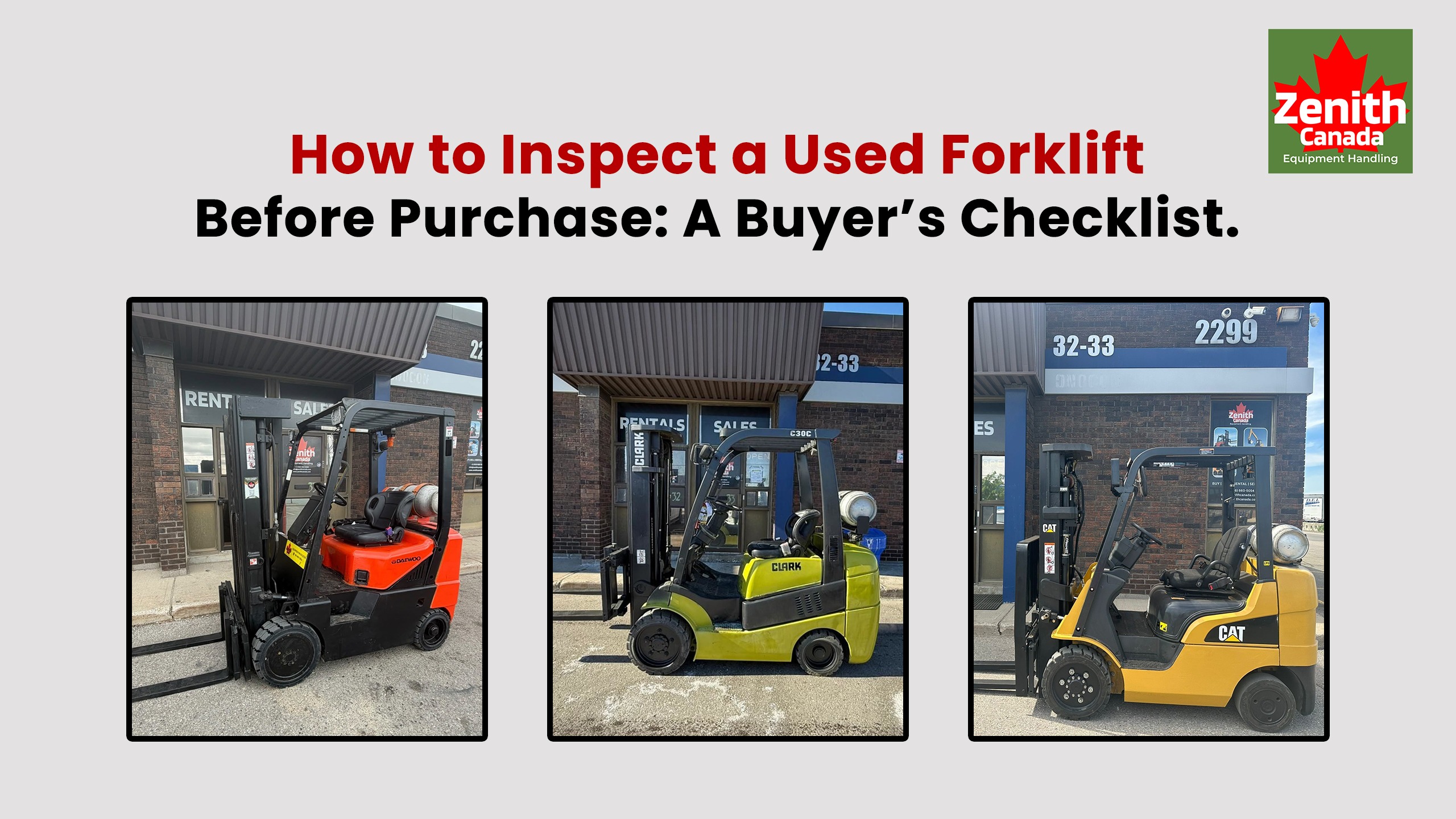
How to Inspect a Used Forklift Before Purchase: A Buyer’s Checklist
Buying a used forklift is a practical way for Canadian businesses to expand their fleet without the higher cost of new equipment. Whether you operate a warehouse, distribution centre, manufacturing facility, or construction site, a quality pre-owned forklift can provide excellent value when purchased from a reputable dealer.
However, not every used forklift is worth the investment. Hidden mechanical issues, excessive wear, poor maintenance history, or damaged components can quickly turn a good deal into an expensive repair project.
That’s why it’s essential to inspect a used forklift thoroughly before making a purchase. A careful inspection helps you identify potential problems, estimate future maintenance costs, and ensure you’re buying equipment that will perform reliably for years.
This buyer’s checklist explains exactly how to inspect a used forklift before purchase and what areas deserve the closest attention.
Why You Should Always Inspect a Used Forklift
Even if a forklift looks clean and well-maintained, appearances can be deceiving. Previous operating conditions, maintenance practices, and workload all affect the machine’s overall condition.
When you inspect a used forklift, you can:
- Avoid unexpected repair expenses
- Identify safety concerns
- Verify maintenance quality
- Confirm the equipment matches your operational needs
- Improve long-term return on investment
A professional inspection also provides peace of mind, especially when purchasing equipment for daily commercial use.
Buy From a Trusted Equipment Dealer
Before beginning the inspection, consider where you’re buying the forklift.
Established material handling equipment dealers typically:
- Perform complete mechanical inspections
- Repair worn components
- Replace damaged parts
- Complete required servicing
- Provide warranty options
- Supply maintenance records
Buying from a reputable dealer significantly reduces the risk of hidden problems compared to purchasing privately or through online marketplaces.
1. Inspect the Overall Exterior Condition
The first step when you inspect a used forklift is conducting a complete walk-around.
Look for:
- Cracks in the frame
- Bent overhead guard
- Damaged counterweight
- Excessive rust
- Poor-quality weld repairs
- Missing panels
- Oil leaks underneath
Minor cosmetic scratches are expected on used equipment, but structural damage should never be ignored.
If the frame has been repaired after an accident, ask for documentation explaining the repair work.
2. Check the Forks Carefully
The forks are among the hardest-working parts of any forklift.
Inspect for:
- Bent forks
- Cracks
- Uneven fork height
- Excessive wear near the heel
- Damaged locking pins
Fork thickness naturally decreases over time.
As a general rule, if the fork has lost more than 10% of its original thickness, replacement is recommended.
Damaged forks reduce lifting capacity and create significant safety hazards.
3. Examine the Mast Assembly
The mast handles every lifting operation, making it one of the most important components to inspect.
Check for:
- Smooth lifting motion
- Excessive chain wear
- Bent mast rails
- Hydraulic leaks
- Loose rollers
- Rust on moving components
Operate the mast through its full lifting range.
Jerky movement or unusual noises often indicate worn bearings, hydraulic problems, or poor maintenance.
4. Inspect the Hydraulic System
Hydraulic issues are expensive to repair, making this step particularly important.
Look closely at:
- Hydraulic hoses
- Lift cylinders
- Tilt cylinders
- Hose fittings
- Pump operation
- Hydraulic fluid levels
Watch for:
- Oil leaks
- Cracked hoses
- Damaged seals
- Slow lifting
- Weak lifting power
Any visible hydraulic leak should be investigated before purchasing.
5. Evaluate the Engine or Electric Power System
Your inspection will vary depending on the forklift’s power source.
LPG or Diesel Forklifts
Check:
- Engine starting
- Idle quality
- Exhaust smoke
- Fuel system leaks
- Engine vibration
- Cooling system
- Belts and hoses
Blue or black smoke often indicates internal engine problems.
Electric Forklifts
Inspect:
- Battery age
- Charging system
- Battery connectors
- Battery water levels
- Cable condition
- Charger compatibility
The battery is one of the most expensive components on an electric forklift. If replacement is needed soon, factor this into the purchase price.
6. Inspect the Tires
Forklift tires directly affect stability, traction, and operator safety.
Inspect for:
- Uneven wear
- Chunking
- Flat spots
- Cuts
- Cracks
- Low tread depth (pneumatic tires)
Determine whether the forklift uses:
- Cushion tires
- Pneumatic tires
- Solid pneumatic tires
Replacing an entire set of tires can become a significant additional expense.
7. Test the Steering and Brakes
During the inspection, drive the forklift in an open area.
Pay attention to:
- Steering responsiveness
- Brake performance
- Parking brake
- Turning radius
- Wheel alignment
- Unusual vibrations
A properly maintained forklift should steer smoothly without excessive play.
Brakes should engage evenly and stop the machine without pulling to one side.
8. Verify the Hour Meter
Operating hours offer valuable insight into equipment usage.
While there is no perfect number of acceptable hours, compare the hour meter with:
- Overall condition
- Wear on pedals
- Steering wheel condition
- Seat wear
- Service records
An unusually low hour reading, combined with heavy wear, may indicate the meter has been replaced or tampered with.
9. Inspect the Operator’s Compartment
A comfortable operator is generally a more productive and safer operator.
Inspect:
- Seat condition
- Seat belt
- Steering wheel
- Dashboard
- Display panel
- Warning lights
- Horn
- Backup alarm
- Mirrors
Ensure all controls operate correctly.
Faulty safety features should always be repaired before the forklift is returned to service.
10. Review Maintenance Records
One of the best ways to inspect a used forklift is by reviewing its service history.
Ask for documentation covering:
- Oil changes
- Hydraulic servicing
- Battery maintenance
- Brake repairs
- Mast servicing
- Tire replacement
- Major component repairs
Well-documented maintenance often indicates responsible ownership.
If no service records exist, inspect the equipment even more carefully.
11. Check Load Capacity and Identification Plate
Every forklift includes a capacity plate showing:
- Maximum lifting capacity
- Lift height
- Load centre
- Model information
- Serial number
Ensure:
- The plate is readable
- Capacity matches your operational requirements
- Attachments have not reduced lifting capacity beyond your needs
Never purchase equipment with missing or unreadable identification plates.
12. Take It for a Complete Operational Test
A visual inspection alone isn’t enough.
Operate the forklift under normal working conditions whenever possible.
Test:
- Forward and reverse travel
- Lifting
- Lowering
- Mast tilt
- Side shift (if equipped)
- Acceleration
- Braking
- Steering
Listen for:
- Grinding noises
- Hydraulic whining
- Engine knocking
- Transmission slipping
A complete operational test often reveals issues that aren’t visible during a stationary inspection.
Questions to Ask Before Buying
Before finalizing your purchase, ask the seller:
- Why is the forklift being sold?
- Has it been involved in any accidents?
- Has the engine or battery been replaced?
- What repairs have recently been completed?
- Is a warranty included?
- Has it passed a recent safety inspection?
- Are replacement parts readily available?
Clear answers help build confidence in your purchase.
Why Buying From Zenith Canada Makes Inspection Easier
When purchasing from a trusted equipment dealer like Zenith Canada, much of the inspection work has already been completed by experienced technicians.
Every quality used forklift should undergo:
- Mechanical inspection
- Hydraulic testing
- Safety inspection
- Preventive maintenance
- Component servicing
- Operational testing
This helps businesses purchase equipment that’s ready to work while reducing the risk of unexpected downtime.
At Zenith Canada, we regularly share practical tips, pre-purchase inspections, equipment evaluations, and buyer guidance for used forklifts and other material handling equipment on our Facebook page. From highlighting what to look for during a forklift inspection to showcasing refurbished equipment and safety checks, our updates help businesses make informed purchasing decisions. Follow our latest Facebook posts to see real examples of professionally inspected equipment, expert buying advice, and quality used forklifts available across Canada.
Final Thoughts
Taking time to inspect a used forklift before purchase is one of the smartest investments you can make. A detailed inspection helps identify potential problems, protects your budget, and ensures you’re selecting equipment that meets your operational requirements.
From checking the forks and mast to testing the hydraulics, engine, tires, brakes, and maintenance history, every step contributes to making an informed buying decision.
If you’re looking for professionally inspected, fully serviced, and dependable used forklifts in Canada, working with an experienced dealer like Zenith Canada provides additional confidence and long-term value. The right inspection today can save thousands of dollars in repairs tomorrow while keeping your operation productive and safe.