Call or WhatsApp today for a free quote : +1 (416) 660-5054

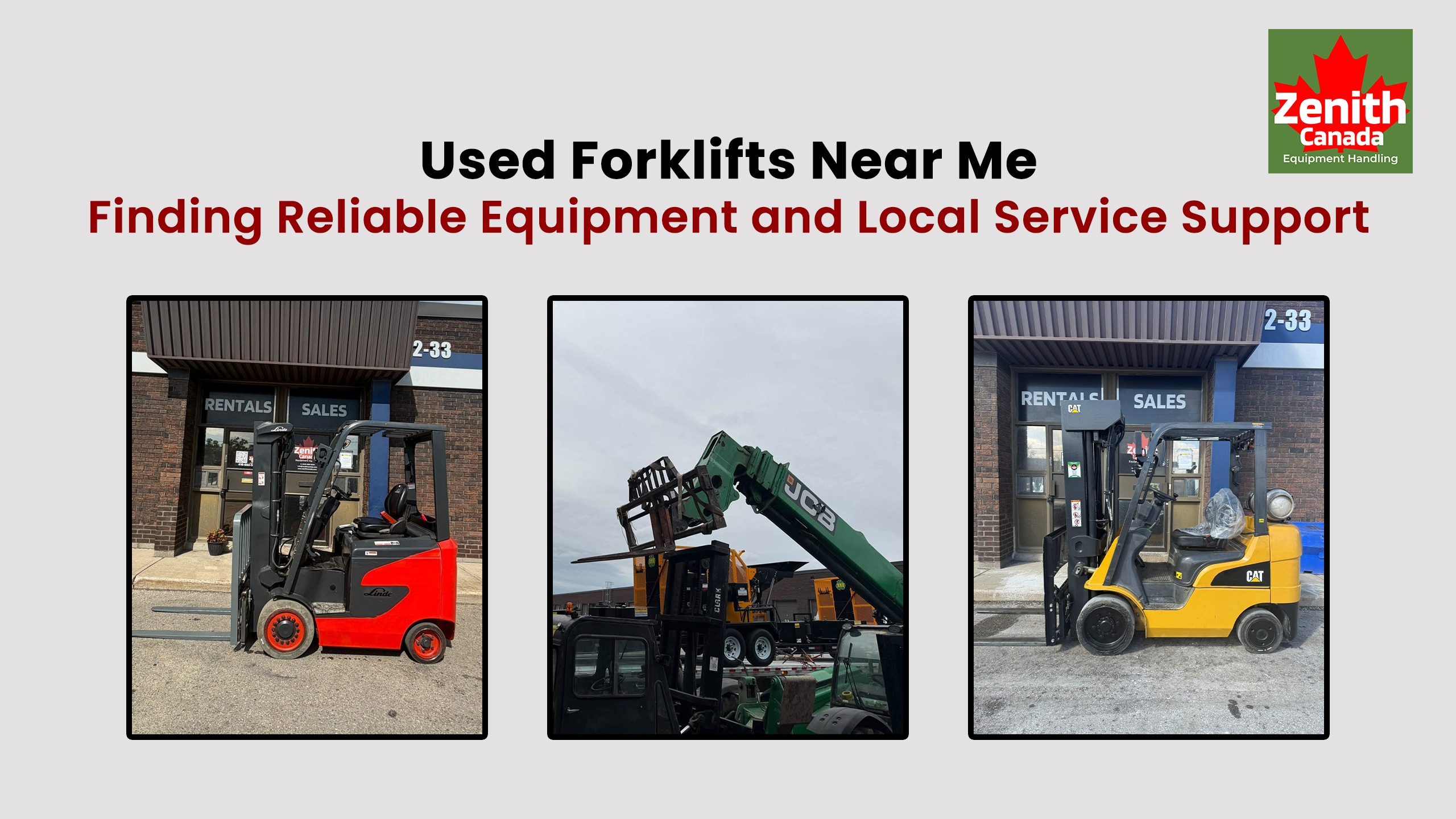
Used Forklifts Near Me: Finding Reliable Equipment and Local Service Support
When a warehouse, distribution centre, or construction business needs a forklift, finding the right equipment nearby can make a significant difference. Searching for used forklifts near me helps businesses identify local equipment dealers, compare available models, and access service support without relying entirely on suppliers located far away.
For businesses in Mississauga, the Greater Toronto Area (GTA), and across Ontario, purchasing a used forklift is only one part of the decision. Reliable equipment also needs access to maintenance, replacement parts, repairs, and technical assistance to keep daily operations running smoothly.
Working with a local material handling equipment dealer can simplify this process. Instead of treating the forklift as a one-time purchase, businesses can consider the full equipment lifecycle, from selecting a suitable machine to maintaining it as operational needs change.
Why Search for Used Forklifts Near Me?
Buying a used forklift locally can offer practical advantages for businesses that depend on consistent material movement. A nearby supplier may make it easier to discuss equipment requirements, coordinate transportation, and arrange service when support is needed.
Here are some reasons Ontario businesses consider local used forklift dealers.
1. Easier Access to Equipment Suppliers
A local dealer gives businesses a point of contact for discussing lifting capacity, operating environment, fuel type, and equipment availability. This can be particularly helpful when a warehouse needs a replacement forklift quickly, or a growing business requires additional material handling capacity.
Local suppliers may also carry different equipment types, allowing businesses to compare options based on their work requirements rather than relying on a single model.
2. More Convenient Transportation Coordination
Forklifts are heavy industrial machines, so transporting them requires suitable equipment and careful planning. Working with a supplier in or near Mississauga may simplify delivery coordination for businesses operating in the GTA.
Transportation arrangements depend on the forklift’s dimensions, weight, destination, and the supplier’s available services. Confirming these details before finalising a purchase helps businesses plan equipment arrival around their operational schedules.
3. Access to Ongoing Service Support
A forklift can experience wear through regular use, particularly in busy warehouses, manufacturing facilities, and distribution centres. Hydraulic issues, electrical faults, worn tyres, and battery problems can affect performance and productivity.
A local supplier that also offers repair and maintenance services can provide a more convenient route to support when problems arise.
For businesses comparing used forklifts near me, it is worth considering not only where the equipment is sold but also who can help maintain it after delivery.
Where Are Forklifts Commonly Used?
Used forklifts support a wide range of commercial and industrial activities. Choosing the right type depends on the materials being moved, available space, lifting height, and working conditions.
Common applications include:
- Warehousing and distribution: Moving pallets, loading trucks, and organising inventory.
- Manufacturing: Transporting raw materials, components, and finished products between work areas.
- Construction: Handling building materials, supplies, and palletised products around suitable job sites.
- Retail and wholesale operations: Moving bulk stock and replenishing storage areas.
- Logistics and transportation: Loading and unloading freight at shipping facilities and distribution hubs.
Businesses should match the equipment to its intended environment. A forklift designed for indoor warehouse aisles may not be suitable for rough outdoor surfaces, while a larger machine may be difficult to manoeuvre in a confined storage area.
Which Type of Used Forklift Fits Your Operation?
When comparing used forklift inventory, consider the equipment’s design and how it will be used each day.
Electric Forklifts
Electric forklifts are commonly used indoors, including warehouses and manufacturing facilities. They produce no exhaust emissions at the point of use and can be suitable for businesses that have appropriate charging infrastructure and battery-management procedures.
LPG Forklifts
LPG models are used in various material handling environments where their operating characteristics and refuelling arrangements suit the work. Businesses should assess ventilation, emissions requirements, fuel availability, and site safety before selecting one.
Diesel Forklifts
Diesel forklifts are often considered for outdoor material handling and demanding industrial applications. Their suitability depends on load requirements, terrain, emissions rules, and the conditions in which they will operate.
You can browse Zenith Canada’s forklift inventory to review the category and identify equipment options that may suit your operation. Confirm current availability and specifications with the dealer before making a decision.
Why Local Forklift Repair and Maintenance Matter
Finding a forklift at a competitive price is important, but the support available after the sale can have an equally significant impact on operating costs.
When a forklift develops a fault, delays can affect loading schedules, warehouse productivity, and material movement. Businesses without a backup machine may need to adjust workflows until the equipment is operational again.
Local repair and maintenance support can help address these challenges.
Preventive Maintenance Helps Reduce Unexpected Downtime
Routine servicing allows technicians to check important components and identify potential issues before they become more disruptive. Depending on the machine and its operating conditions, maintenance may include checking:
- Brakes, steering, and tyres
- Hydraulic hoses, cylinders, and fluid levels
- Battery condition, charging systems, and electrical connections
- Engine performance and transmission operation, where applicable
- Forks, mast components, chains, and other load-handling parts
- Safety devices and operational controls
Maintenance schedules should follow the manufacturer’s recommendations, equipment condition, and actual usage. Businesses with intensive operating schedules may need more frequent attention than those using a forklift occasionally.
Timely Repairs Can Protect Equipment Performance
Even well-maintained equipment may eventually require repairs. Electrical faults, hydraulic leaks, engine problems, and worn mechanical components can affect safe operation and reliability.
Having a dependable repair provider can help businesses arrange diagnosis and repairs more efficiently. Depending on the provider’s capabilities, support may be available at a service facility or through mobile equipment repair.
Don’t Overlook Forklift Parts Availability
Replacement parts are another consideration when choosing used equipment. A forklift may suit the job, but sourcing the right parts can be challenging if its make, model, or configuration is hard to support.
Before committing to a machine, ask the supplier about parts support for its specific model. Depending on the equipment, commonly serviced items may include filters, tyres, hydraulic components, electrical parts, batteries, switches, and brake components.
Correct parts selection matters because specifications can vary between models, even within the same manufacturer.
A supplier with equipment parts experience can help businesses identify compatible components and understand their options. Zenith Canada provides a dedicated material handling equipment parts page for businesses looking for parts support.
How to Choose a Reliable Local Equipment Dealer
A search for used forklifts near me can return several suppliers, but the closest option is not necessarily the best fit. Businesses should consider the dealer’s equipment range, service capabilities, communication, and ability to support their operational requirements.
Use these questions when comparing local suppliers:
| What to check | Why it matters |
| Equipment range | Helps you compare models suitable for your work environment. |
| Clear specifications | Gives you information about capacity, power source, configuration, and operating hours where applicable. |
| Condition and documentation | Helps establish the machine’s maintenance history, inspection status, and known issues. |
| Repair capabilities | Shows whether support may be available if the forklift develops a fault. |
| Parts support | Helps you plan for routine servicing and replacement components. |
| Delivery arrangements | Clarifies transportation responsibilities, costs, and timing. |
| Warranty terms | Establishes what is covered, for how long, and under which conditions. |
Ask for written details on the equipment’s condition, any included warranty, inspection documentation, and the terms of sale. Requirements may vary depending on the equipment and its intended use, so confirm that the forklift is appropriate for the workplace and applicable safety obligations.
Finding Used Forklifts Near Me in Mississauga and the GTA
Mississauga is a key location for businesses involved in warehousing, logistics, manufacturing, construction supply, and distribution. Companies operating throughout the GTA may need forklifts for pallet movement, loading and unloading, inventory handling, or specialised material handling tasks.
For these businesses, a supplier that understands both equipment sales and after-sales support can make equipment management more straightforward.
Zenith Canada Equipment Handling Inc., based in Mississauga, Ontario, supports businesses looking for material handling equipment and related services. Its website includes equipment inventory, forklift listings, repair services, and parts information.
How Local Service Support Can Help Manage Long-Term Costs
The purchase price is only one part of the cost of owning a used forklift. Businesses should also account for servicing, repairs, energy or fuel, operator training, parts, and downtime.
A lower-priced machine may not offer the best overall value if it requires frequent repairs or has limited parts support. Similarly, a more expensive model may not be necessary if the business has straightforward lifting and movement requirements.
A practical way to assess the total cost is to consider:
- The purchase price and transportation charges
- Expected servicing and replacement-part costs
- Fuel or electricity consumption
- The availability of qualified repair technicians
- The impact of potential downtime on daily operations
- The machine’s suitability for the expected workload
This approach helps businesses compare equipment based on its expected contribution to operations rather than its initial price alone.
For businesses with changing requirements, it may also be worth asking a dealer about equipment trade-ins, replacement options, or alternative models when a machine no longer meets operational needs.
Final Thoughts
Searching for used forklifts near me is a useful starting point for businesses that need dependable material handling equipment in Mississauga, the GTA, or elsewhere in Ontario. However, the best decision involves more than locating a machine nearby.
Equipment suitability, maintenance requirements, parts availability, repair access, warranty coverage, and transportation arrangements all contribute to long-term value. By assessing these factors together, businesses can choose equipment that fits their operations and plan for support throughout its working life.
Zenith Canada Equipment Handling Inc. offers a starting point for businesses reviewing forklift inventory, equipment parts, and repair services.
Frequently Asked Questions
1. Where can I find used forklifts near me in Ontario?
Businesses in Ontario can search for local material handling equipment dealers, compare their available inventory, and contact suppliers to confirm specifications and availability. Businesses in Mississauga and the GTA can review Zenith Canada’s forklift inventory.
2. Is buying a used forklift from a local dealer a good option?
It can be a practical option for businesses that want access to equipment information, transportation coordination, and potential after-sales support. Compare the machine’s condition, documentation, warranty terms, and service arrangements before purchasing.
3. Can I get forklift repairs after buying used equipment?
Repair availability depends on the service provider, equipment make and model, and the type of fault. Ask whether the provider offers workshop repairs, mobile service, diagnostics, preventive maintenance, and access to compatible replacement parts.
4. What maintenance does a used forklift need?
Maintenance varies by equipment type and usage. Typical tasks include checking brakes, tyres, steering, hydraulic systems, electrical components, batteries or engines, and load-handling components. Follow the manufacturer’s maintenance schedule and address faults promptly.
5. Should I consider parts availability before choosing a used forklift?
Yes. Parts availability can affect repair lead times, maintenance planning, and equipment downtime. Confirm that the necessary components can be sourced for the specific make, model, and configuration.
6. Can a local dealer help with forklift transportation?
Some dealers can coordinate transportation, while others require buyers to arrange it independently. Confirm delivery availability, costs, responsibilities, and estimated timing before finalising the purchase.
7. What should I ask about a used forklift’s warranty?
Ask what components are covered, how long the warranty lasts, any exclusions, and how repair claims are handled. Obtain the terms in writing and clarify whether labour and replacement parts are included.