Call or WhatsApp today for a free quote : +1 (416) 660-5054

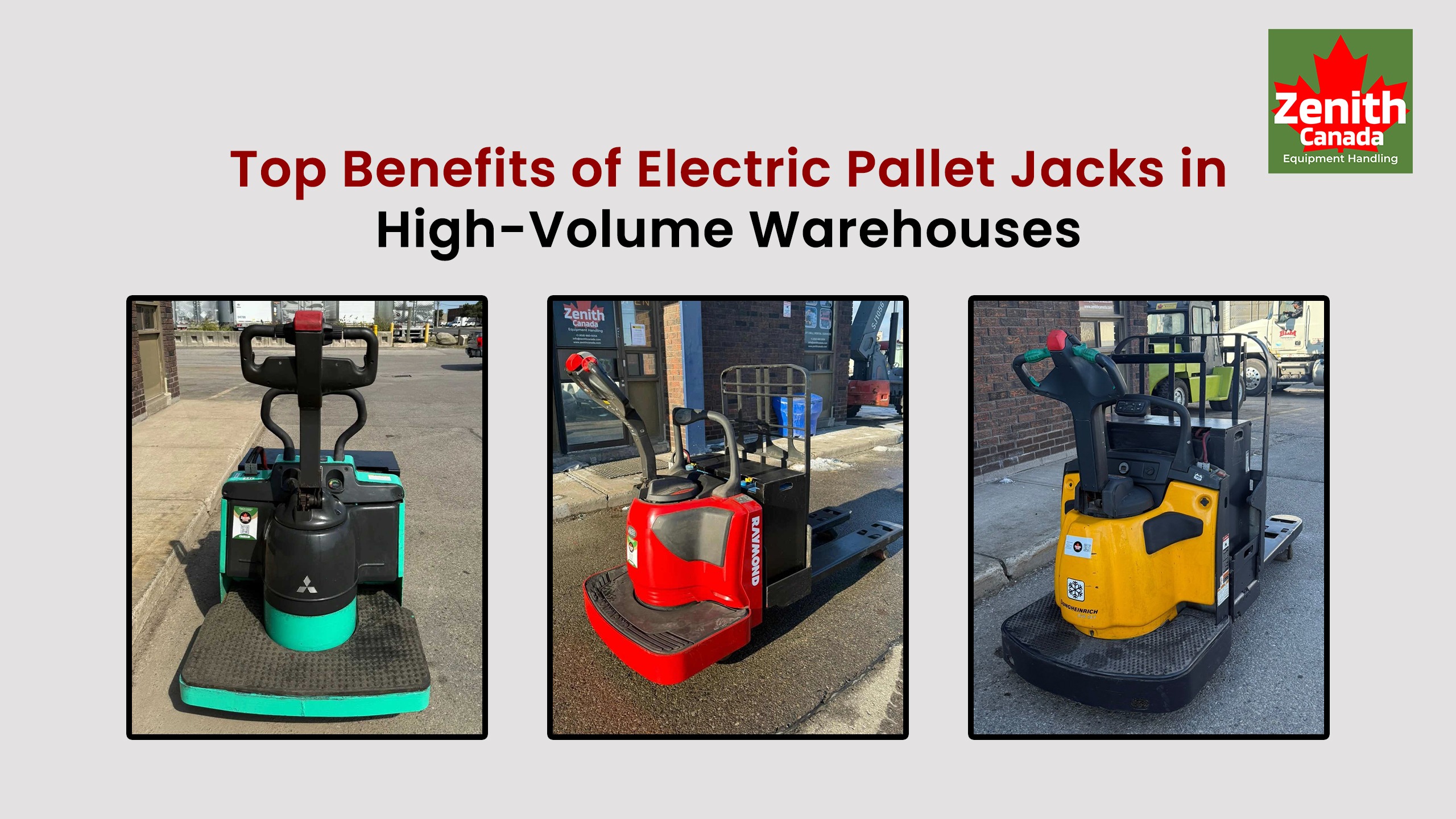
Top Benefits of Electric Pallet Jacks in High-Volume Warehouses
Introduction
High-volume warehouses handle hundreds of pallet movements every day. From receiving shipments and replenishing inventory to preparing orders for dispatch, efficient material handling is essential for keeping operations on schedule. When employees rely on manual equipment for repetitive tasks, physical fatigue and slower movement can affect overall productivity.
Electric pallet jacks offer a practical solution for businesses that need to move palletised goods frequently and efficiently. Powered travel reduces the physical effort required from operators, while compact designs make these machines suitable for many warehouse environments.
For Canadian distribution centres, manufacturing facilities, and logistics businesses, choosing the right equipment can help streamline daily workflows and manage operating costs. Here are the key benefits of using electric pallet jacks in high-volume warehouse operations.
1. Improve Warehouse Productivity
One of the main advantages of electric pallet jacks is their ability to support frequent pallet movement with less manual effort. Unlike manual pallet jacks, which require operators to push or pull loads, powered models use an electric drive system to move materials.
This can be particularly useful when employees transport goods between receiving docks, storage areas, packing stations, and dispatch zones throughout a shift.
Electric pallet jacks can help teams maintain a more consistent workflow, especially during busy periods when order volumes increase. Faster movement between work areas can also reduce unnecessary delays and help employees complete material handling tasks more efficiently.
2. Reduce Physical Strain on Employees
Moving heavy pallets repeatedly can place considerable strain on workers, particularly over long distances or during extended shifts.
Electric pallet jacks reduce the pushing and pulling effort required for powered travel. This can make repetitive material handling tasks more manageable and help reduce operator fatigue.
Potential benefits include:
- Less physical effort during routine pallet transportation
- Improved comfort during repetitive tasks
- Reduced fatigue during busy shifts
- More manageable movement of heavy loads within rated capacity
Electric equipment does not eliminate every ergonomic risk. Operators still need proper training, safe handling practices, and appropriate working conditions. However, reducing manual effort can be an important step towards a more comfortable working environment.
3. Handle Heavy Loads More Efficiently
High-volume warehouses often move palletised products weighing hundreds or thousands of pounds. An electric pallet jack can help operators transport these loads without relying entirely on physical force.
Before purchasing, businesses should check the machine’s rated load capacity and ensure it suits their typical pallet weights. Fork dimensions, pallet compatibility, floor conditions, and travel distance also affect performance.
Choosing equipment that matches the workload helps prevent overloading and supports safer daily operations.
4. Make Better Use of Warehouse Space
Many warehouses operate with limited floor space, narrow aisles, and busy loading areas. Electric pallet jacks are often compact enough to manoeuvre through spaces where larger material handling machines may be less practical.
Depending on the model, they can support pallet movement through:
- Storage aisles
- Loading and unloading areas
- Order preparation zones
- Production workstations
- Shipping and receiving departments
Before selecting a machine, measure aisle widths, turning areas, doorways, and dock access points. The equipment must fit the layout while leaving enough room for safe pedestrian movement and load handling.
If your warehouse requires vertical storage or frequent stacking, a pallet stacker or forklift may be more appropriate. You can compare alternatives in Zenith Canada’s guide to electric pallet stackers vs. walkie stackers.
5. Support More Consistent Daily Operations
In a busy warehouse, delays in one area can affect several other tasks. If pallets take too long to reach packing or dispatch, employees may have to wait before completing their work.
Electric pallet jacks can help maintain a steady flow of goods between operational areas. Their powered movement is especially useful when pallets must travel repeatedly throughout a facility.
Businesses may benefit from more predictable internal transportation, smoother replenishment, and fewer interruptions caused by physically demanding pallet movement.
Actual productivity improvements depend on warehouse layout, operator training, load weight, travel distance, and how well the equipment fits existing workflows.
6. Reduce Long-Term Operating Costs
Although electric pallet jacks generally cost more upfront than basic manual models, they may provide better value in high-use environments.
When evaluating the investment, consider the following costs:
- Initial purchase price
- Battery charging and replacement
- Routine maintenance
- Replacement wheels and rollers
- Hydraulic and electrical repairs
- Equipment downtime
Electric models have additional battery and drive-system components that require attention. However, reducing manual effort and improving workflow may help offset these costs in operations with frequent pallet movements.
Regular inspections and timely servicing are essential for maintaining performance. Zenith Canada’s material handling equipment repair services can be a useful resource when planning equipment maintenance and repairs.
7. Improve Control and Handling
Many electric pallet jacks feature ergonomic controls, powered travel, and braking systems designed to support controlled movement.
Depending on the model, features may include emergency stop controls, safety switches, horns, and speed controls. These features can help operators manage loads in busy working environments when used correctly.
Employers should ensure operators receive appropriate training and understand the equipment’s controls, rated capacity, and operating limitations.
Safe handling also requires maintaining clear travel paths, observing pedestrian traffic, and avoiding sudden movements that could destabilise a load.
8. Choose Equipment That Matches Your Workload
Not every warehouse needs the same type of electric pallet jack. Walk-behind models may suit many facilities, while ride-on or platform-equipped versions may be more practical for longer travel distances and higher movement volumes.
Consider these factors before buying:
- Load capacity: Match the rated capacity to your heaviest routine loads.
- Travel distance: Assess how far pallets move during a typical shift.
- Battery performance: Check operating time, charging requirements, and replacement costs.
- Warehouse layout: Confirm aisle clearance and turning space.
- Maintenance support: Check the availability of replacement parts and qualified technicians.
- Budget: Compare purchase price with expected maintenance and operating costs.
For businesses considering pre-owned equipment, inspecting the battery, drive system, controls, forks, wheels, and service history is particularly important.
Conclusion
Electric pallet jacks can make a meaningful difference in high-volume warehouses by reducing manual effort, supporting consistent pallet movement, and helping employees manage repetitive material handling tasks more efficiently.
The best choice depends on your daily workload, load capacity requirements, warehouse layout, battery needs, and maintenance budget. By evaluating these factors before purchasing, Canadian businesses can select equipment that supports productivity without overlooking safety or long-term operating costs.
At Zenith Canada, businesses can explore material handling equipment and access support for their equipment needs. Choosing the right pallet jack today can help keep warehouse operations organised, efficient, and ready for daily demands.